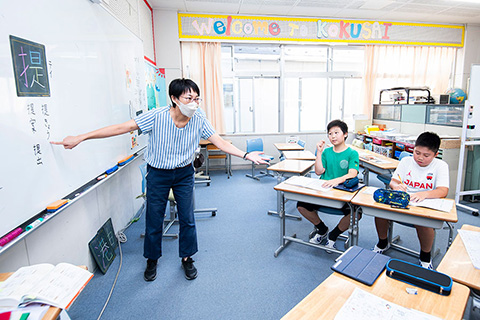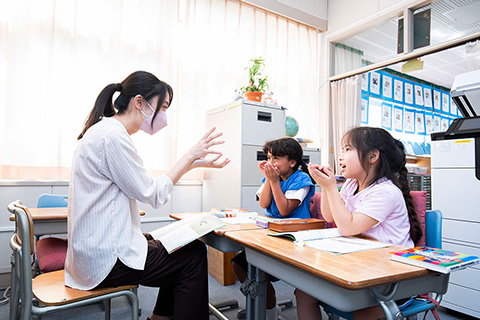





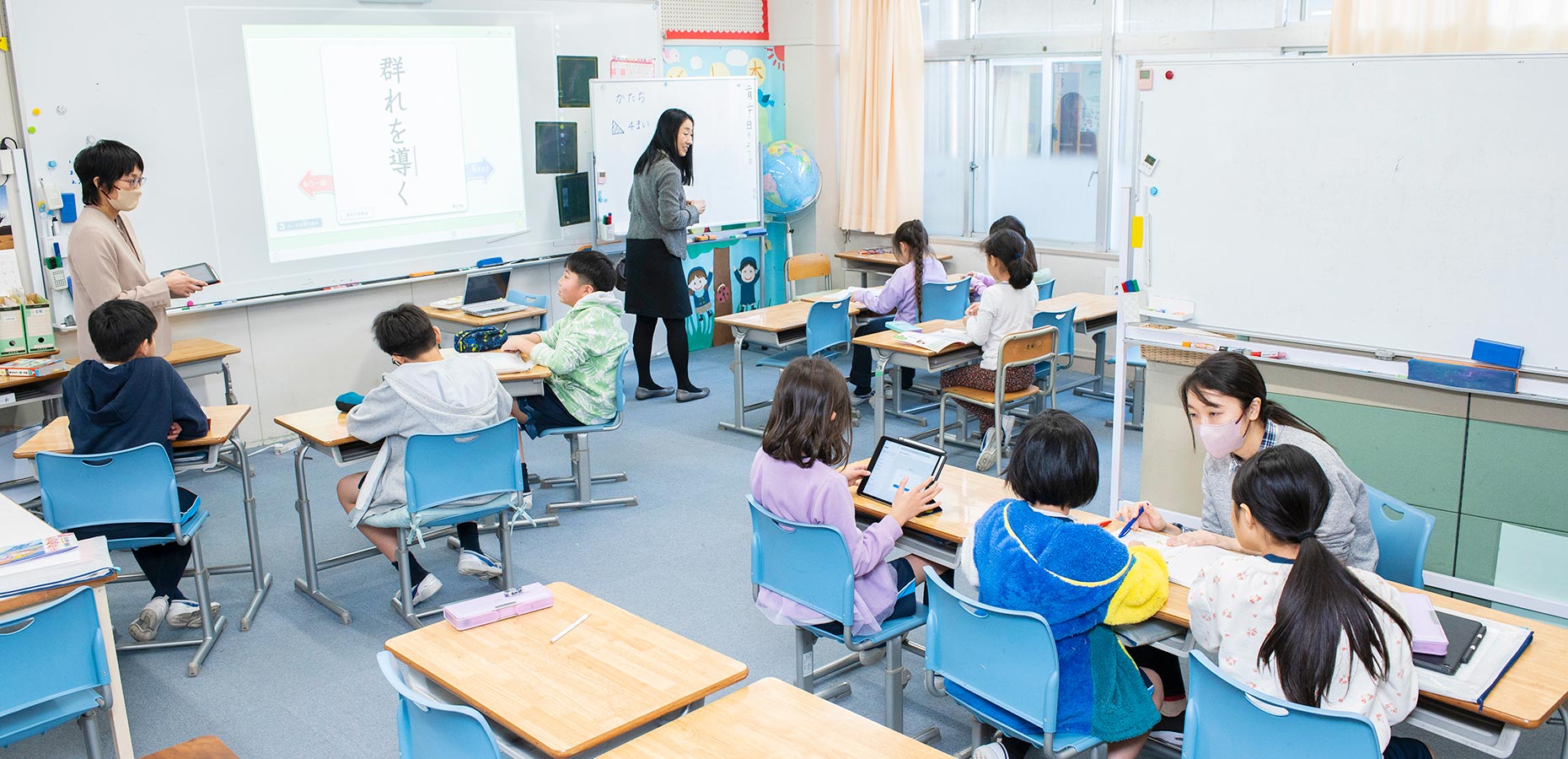
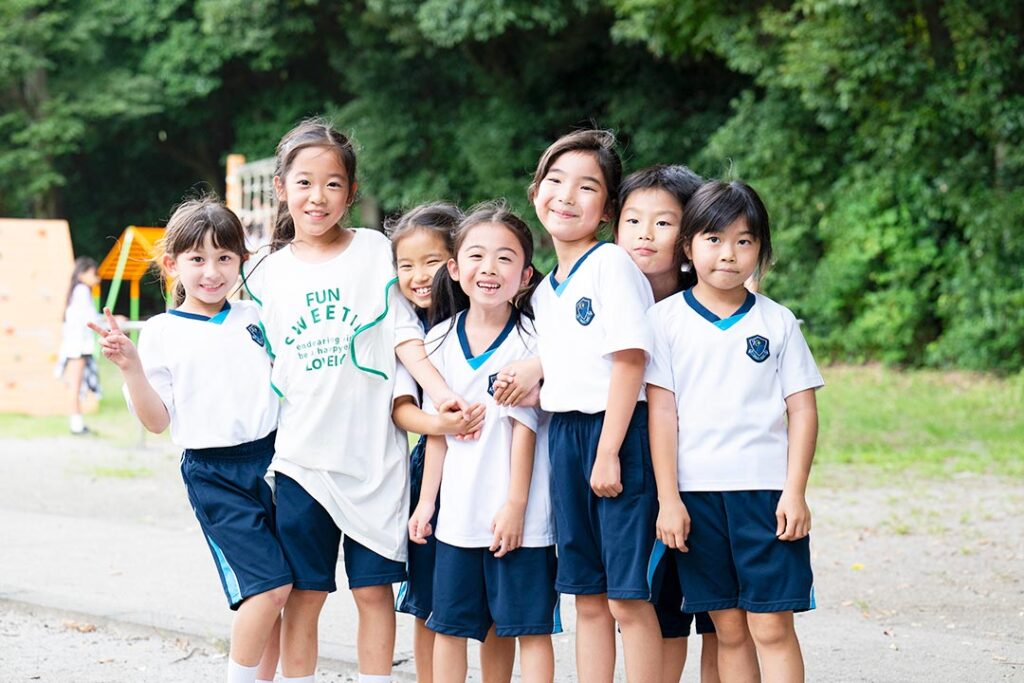
At Keimei Gakuen, we value each of our students' unique backgrounds, including their birthplace, upbringing, and languages they speak.
Here, international students with diverse cultural roots learn in the same homerooms as children born and raised in Japan.
Daily interaction with different cultures and perspectives has a positive impact on children's personal development.
At the same time, some international students may face challenges in participating in subject-based learning with everyone else in their homeroom.
The language and experiences they have acquired in the environments where they were born and raised form a vital foundation for who they are.
Building on that foundation, we provide support to help students understand and express themselves in Japanese so they can excel in their own unique ways.
Our Goals
Building Proficiency in the Four Core Japanese Language Skills
To understand and retain what is taught in subjects like Japanese and math in their classes, students need not only conversational skills such as speaking and listening, but also reading and writing skills.
In the International Progress Class, we assess each student's Japanese language skills in speaking, listening, reading, and writing to objectively evaluate their abilities.
Based on these assessments, we set individualized goals aligned with each student's current skills.
We then design learning plans that enable students to understand academic content in Japanese and express their thoughts and what they have learned.
Developing Fundamental Study Habits
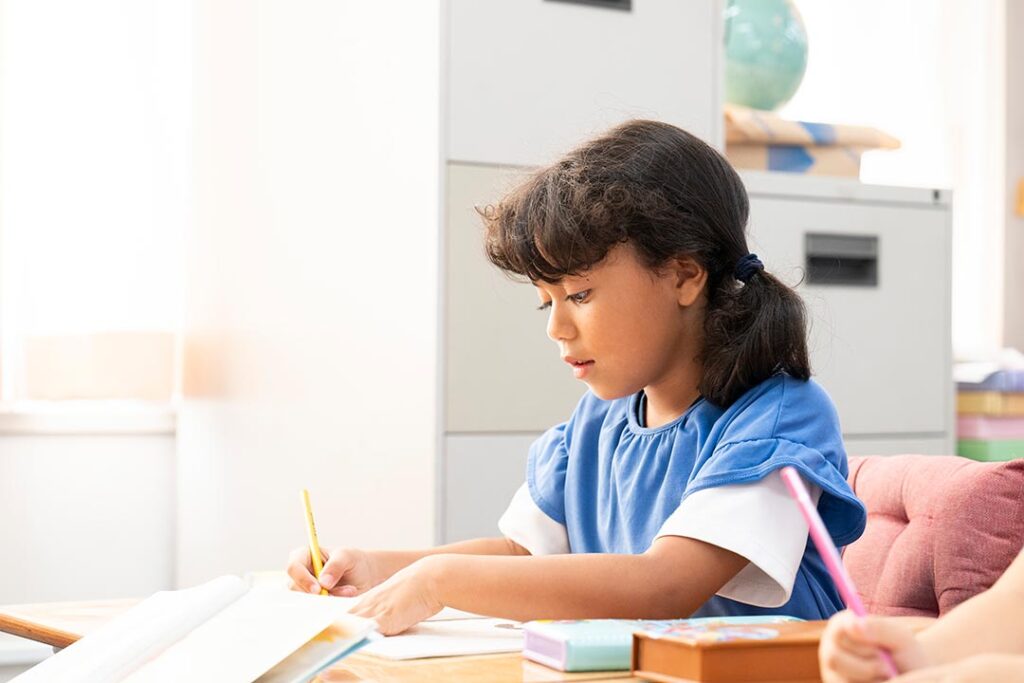
Some children who have received education abroad, whether at local schools or international schools, may not have established study habits at home.
We work closely with families to help students develop a consistent routine of reading and writing practice each day.
We also encourage basic study habits during everyday class time, such as maintaining good posture and listening while making eye contact with a speaker.
Building a Vocabulary Basis for Understanding and Self-Expression
As children grow, they are exposed to more and more words.
By actually using those words, they absorb and acquire a broad vocabulary.
These experiences form the basis for thinking, understanding, and expressing themselves through language.
International students often switch between Japanese and other languages in their daily lives.
Because they are acquiring both Japanese and other languages simultaneously, they may have smaller vocabularies compared to children who were raised speaking only one language before starting school.
In particular, they may find it more difficult to acquire language for expressing abstract thoughts.
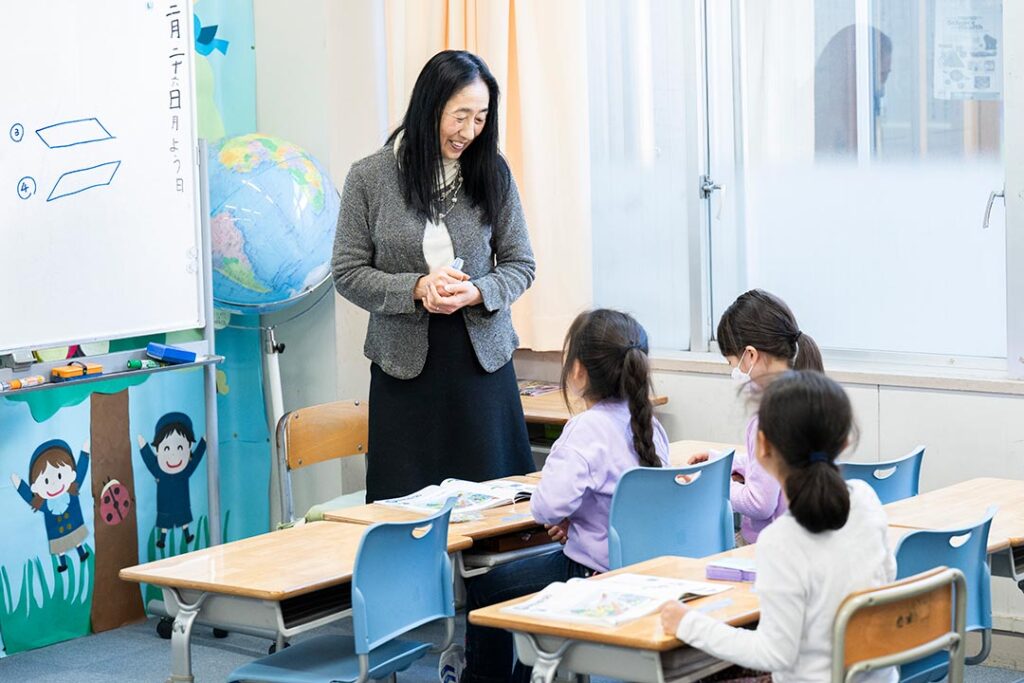
With this in mind, we design lessons that use subject-based learning to help students understand and express themselves in Japanese.
Teacher's Voice
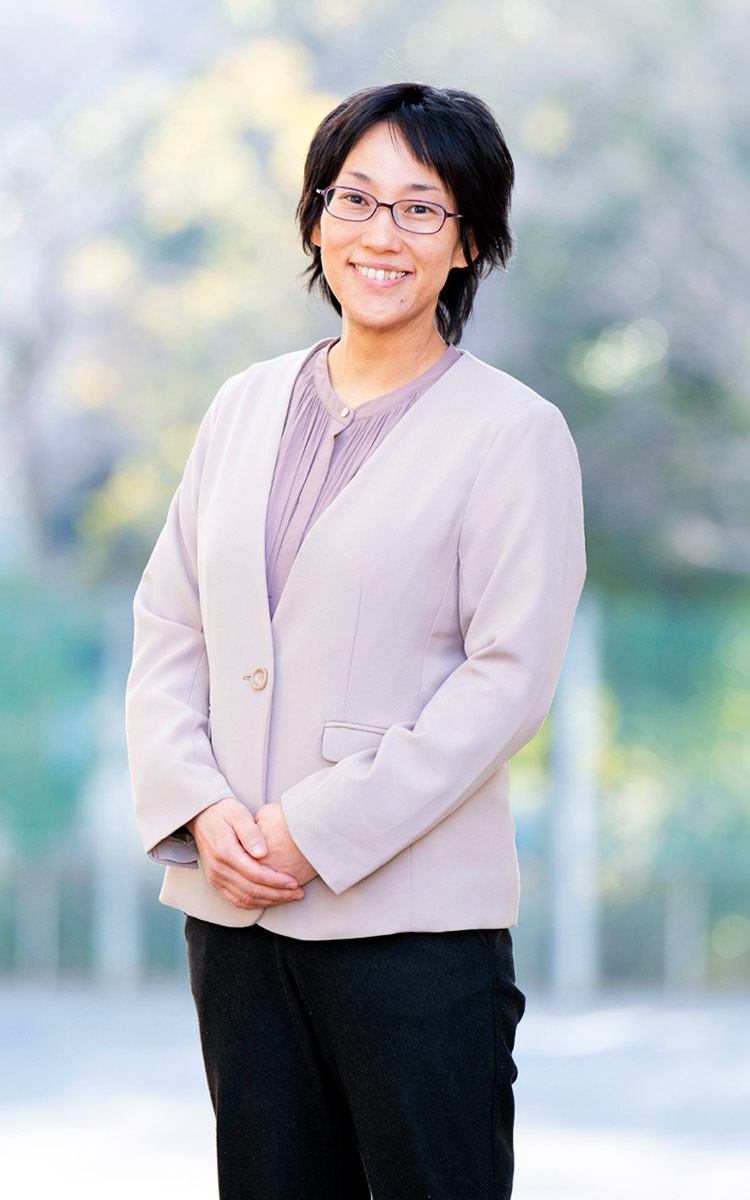
Nakano Yumiko,
Head of International Classes
We want every student growing up in a multilingual environment to feel glad they attend this school.
In the International Progress Class, students with a variety of backgrounds learn together. Because they are growing up with more than one language, it is natural that these students may have different kinds of struggles or concerns.
For example, things that were once easy in the country where they previously lived may become difficult due to the language barrier of Japanese.
Students may have difficulty with listening comprehension or writing because they use a language other than Japanese at home.
It may also be hard for students to set goals for studying Japanese if they anticipate moving abroad again in a few years.
We hope to support these students by their side so that each of their struggles and experiences can become a meaningful part of their growth.
We aim to help them expand and build up what they can understand and do in Japanese so that they are glad they attended our school.
MENU